

How To Reduce Damage Risk In Export Packaging Boxes
A practical guide for overseas buyers to improve packaging strength, product protection and shipping safety before placing custom packaging box orders.

Why Export Packaging Damage Happens
Export packaging boxes often go through long-distance transportation, warehouse handling, stacking, loading, unloading and climate changes. Even if the product box looks beautiful, it may still be damaged if the structure, insert, carton strength or packing method is not properly designed.
For perfume boxes, cosmetic packaging, gift boxes, paper bags and luxury packaging orders, damage can affect both product safety and brand image. Buyers should check protection performance before mass production instead of only focusing on appearance and unit price.
1. Choose A Strong Enough Box Structure
The first step is to select a box structure that matches the product weight and shipping method. Heavy glass bottles, skincare jars, wine bottles and electronic products need stronger support than lightweight paper products. If the box structure is too weak, corners may collapse or the box may deform during stacking.
Rigid boxes, drawer boxes and magnetic closure boxes should use suitable grey board thickness. Folding cartons should use paperboard with enough stiffness. For fragile products, an inner tray or insert should be included to keep the product fixed during transport.

2. Use Proper Inserts To Prevent Product Movement
Product movement inside the box is one of the main reasons for damage. If the bottle, jar or product can shake during transportation, it may hit the box wall, scratch the surface or break the packaging structure.
Common insert options include EVA foam, paperboard tray, molded pulp, sponge and cardboard divider. The insert should fit the product shape closely and provide enough support. For export orders, buyers should test the insert together with the outer box and shipping carton.
3. Confirm Export Carton Strength
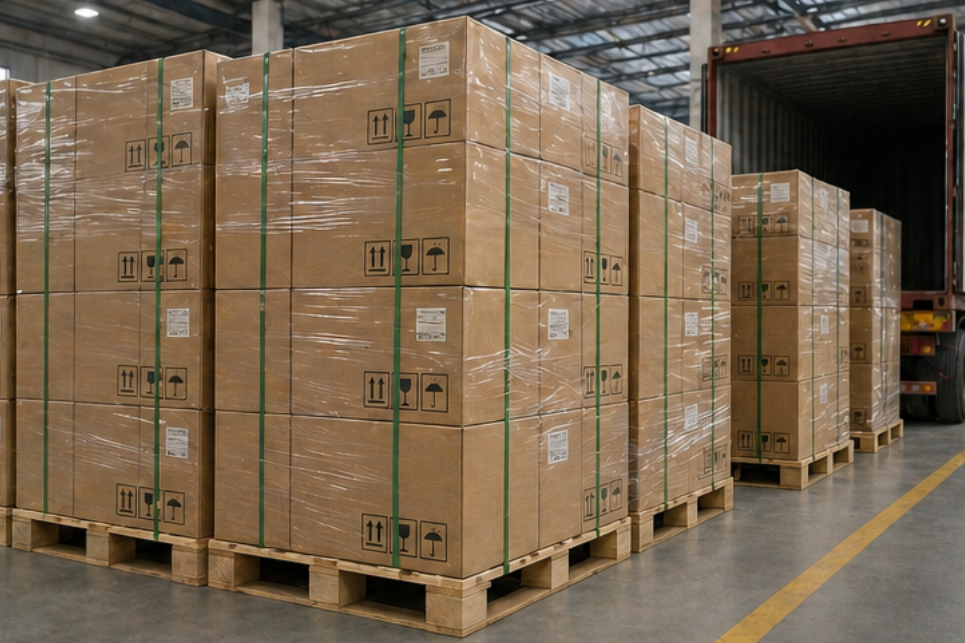
The outer carton plays a critical role in export shipping. Even if the product box is well designed, weak export cartons may cause crushing, deformation or corner damage during stacking. Buyers should confirm carton material, corrugated layers, carton size and packing quantity per carton.
For heavy products or long-distance sea freight, stronger corrugated cartons are recommended. The carton should not be too large, otherwise products may move inside. It should also not be too tight, because pressure may damage the retail packaging boxes.
| Risk Point | Possible Problem | Recommended Check |
|---|---|---|
| Weak box structure | Box deformation or corner collapse | Confirm board thickness and structure strength |
| Loose product inside | Scratches, breakage or shaking damage | Use fitted inserts or trays |
| Weak export carton | Crushing during stacking | Check corrugated carton strength |
| Poor moisture protection | Paper deformation or surface damage | Use proper wrapping and moisture control |
4. Protect Against Moisture And Surface Scratches
Paper packaging can be affected by humidity, friction and surface pressure during export transportation. Matte lamination, soft-touch coating, foil stamping and textured paper surfaces may be scratched if packaging boxes rub against each other.
Buyers should confirm whether each box needs individual wrapping, protective paper, plastic-free wrapping or separated packing. For sea freight or humid regions, moisture control should be considered to reduce paper warping, mold risk and surface damage.
5. Request Samples And Packing Tests Before Mass Production
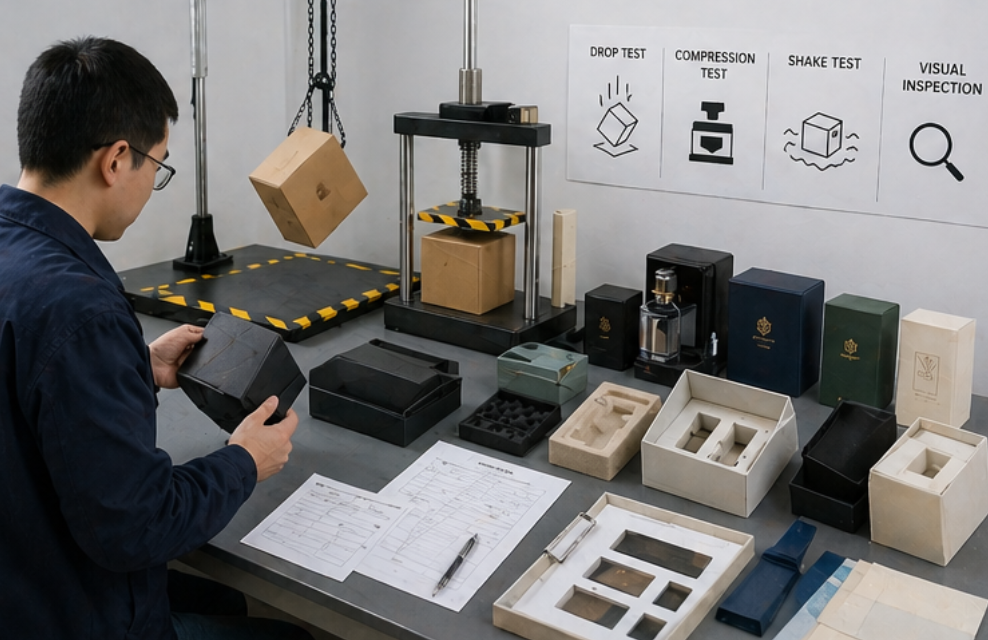
A physical sample helps buyers check structure, material, insert fitting and surface finishing. However, for export orders, checking the sample alone is not enough. Buyers should also confirm how the boxes will be packed into export cartons.
Basic packing checks may include shaking test, stacking test, drop test, carton compression check and product fitting inspection. These tests help identify possible damage risks before the full order is produced and shipped.
Buyer Checklist To Reduce Export Damage Risk
Confirm product size, weight and fragility before packaging design.
Choose box structure and board thickness based on product weight.
Use fitted inserts to prevent product movement inside the box.
Check export carton material, size and packing quantity.
Confirm whether individual wrapping is needed for premium surfaces.
Consider moisture protection for long-distance sea freight.
Approve physical samples before mass production.
Ask for packing method photos or test results before shipment.
Conclusion
Reducing damage risk in export packaging boxes requires more than a beautiful design. Buyers should check box structure, insert fitting, export carton strength, moisture protection, surface protection and packing tests before mass production.
A reliable packaging solution should protect the product, keep the retail box in good condition and ensure that the goods arrive safely after long-distance international shipping.
Need Safer Export Packaging Boxes?
Contact us to discuss box structure, insert design, export carton packing and custom packaging solutions for your products.
Get Quote Contact UsRelated product and article resources
For procurement comparison and technical evaluation, readers can continue with these related product pages and supporting articles.
