

Luxury gift packaging is never just a container. For premium products such as tea, cosmetics, wellness products, gourmet food, candles, jewelry, or cultural gifts, the box becomes part of the product value itself. The packaging shown in this design reference gives a strong example of how a simple color palette, refined structure, cultural details, and layered unboxing can turn an ordinary gift set into a memorable brand experience.
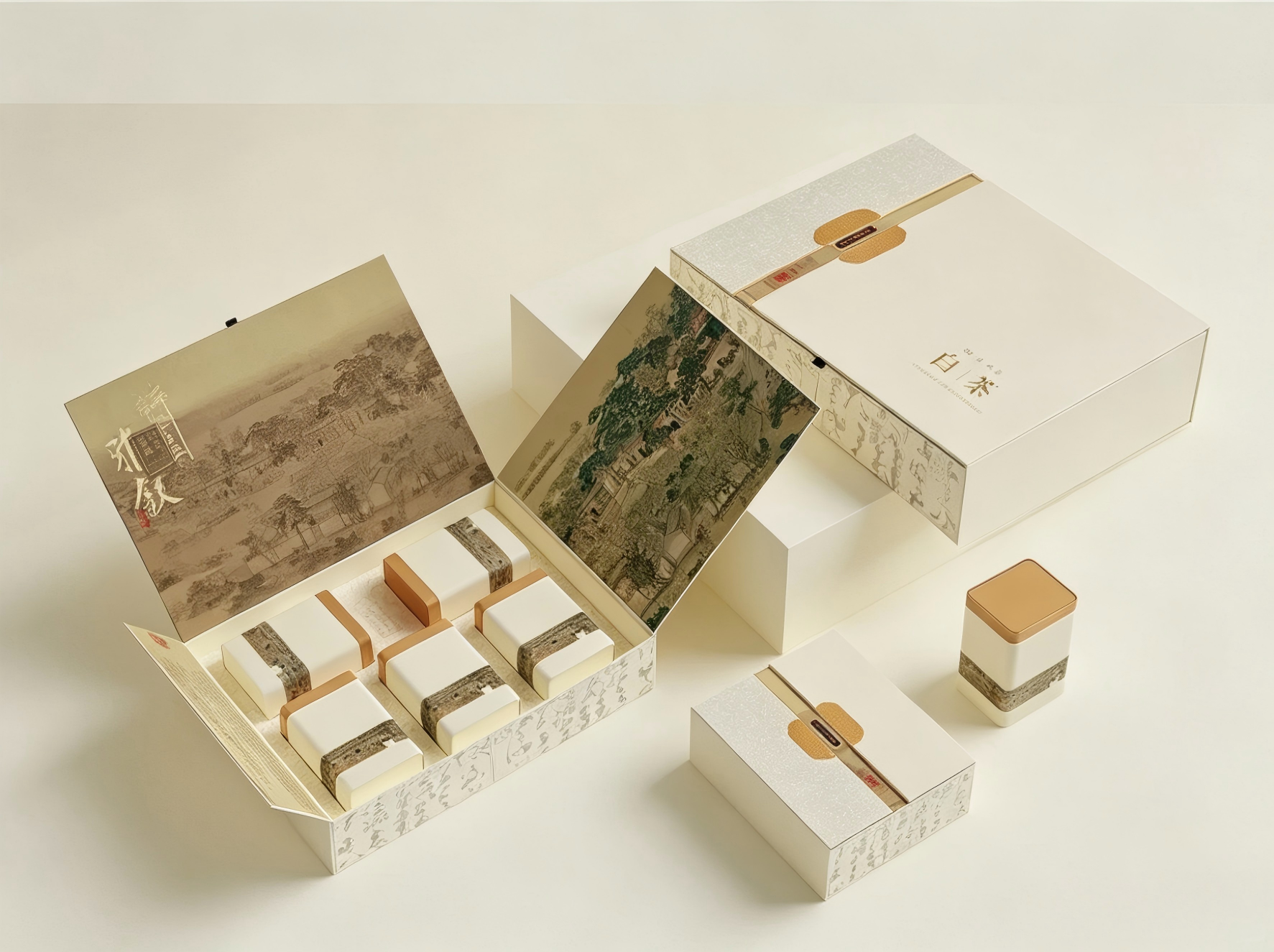
The first impression of this gift box comes from its calm ivory tone. Instead of using heavy colors or excessive decoration, the design uses a soft cream-white base to create a quiet, elegant feeling. This type of color choice is especially suitable for high-end tea packaging, wellness gift boxes, Chinese-style cultural gifts, premium food packaging, and boutique corporate gifts. White and warm beige tones suggest purity, calmness, quality, and restraint. For overseas markets, this visual language is easy to understand because it does not rely too heavily on complicated cultural symbols. It feels premium, clean, and sophisticated at first glance.
One of the most important design inspirations from this box is the balance between minimalism and decoration. The front cover leaves a large blank area, allowing the product name and logo to stand out clearly. This is a smart approach for luxury packaging. Many brands make the mistake of filling every space with patterns, product claims, icons, and selling points. However, true premium packaging often uses empty space to create confidence. A clean surface tells buyers that the brand does not need to shout. It allows the material, structure, and finishing details to speak for the product.
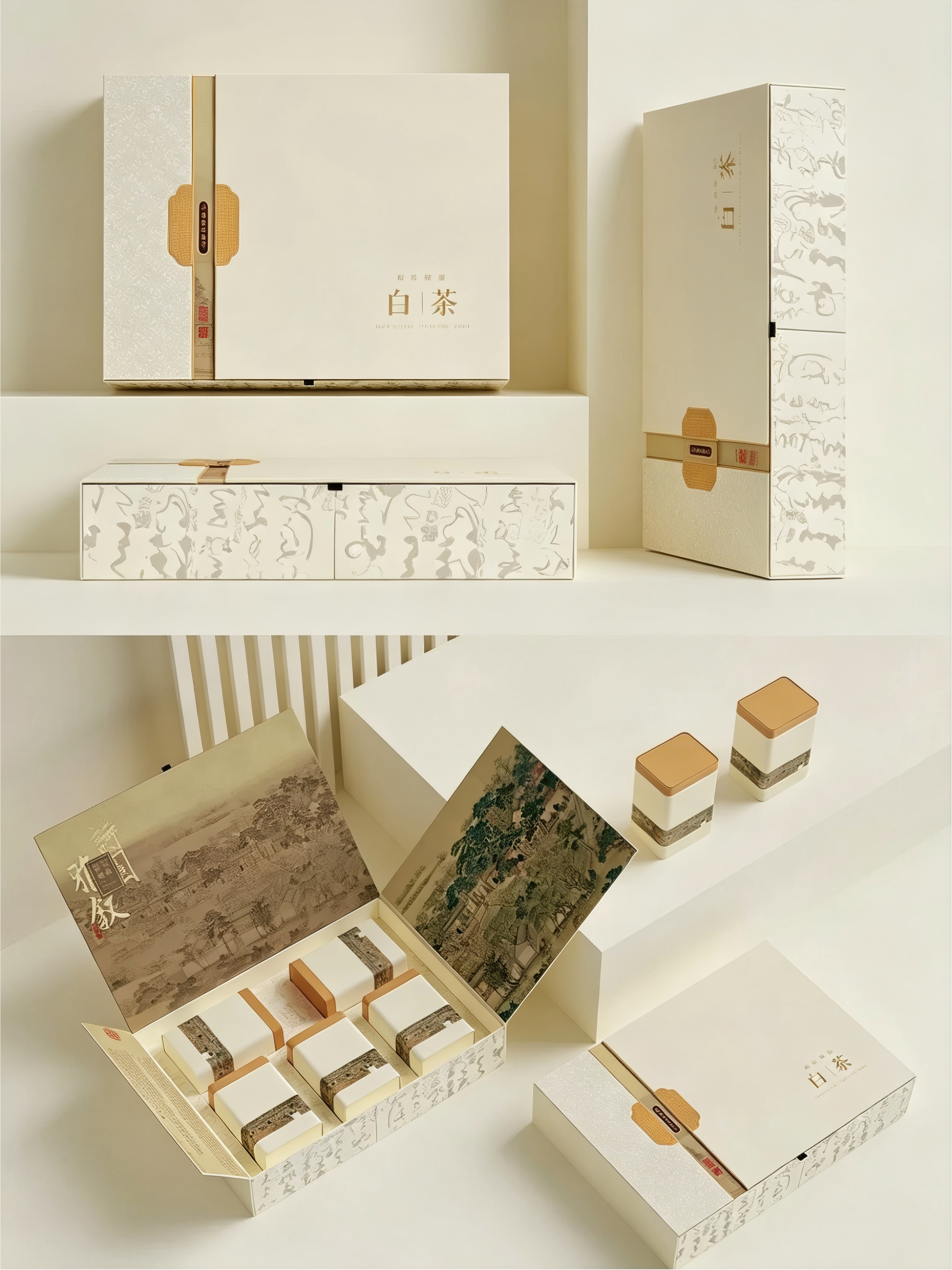
The gold vertical decorative strip on the box adds an immediate sense of value. Gold is often used in luxury gift packaging because it communicates celebration, refinement, and high perceived worth. But in this design, gold is not used everywhere. It appears as a controlled accent, creating a strong visual line across the box. This makes the packaging look more ceremonial, almost like opening a scroll or a formal invitation. For brands that want to create a luxury gift box, this is a useful lesson: metallic foil should be used with purpose, not simply added as decoration. A narrow foil line, a stamped logo, a seal, or a refined border can often look more expensive than large areas of shiny material.
The box also uses subtle embossed or textured patterns on the side panels and cover area. This is a key detail in premium packaging design. From a distance, the box looks clean and simple. When the customer holds it in hand, the surface texture gives a richer tactile experience. For luxury packaging, touch matters as much as appearance. Embossing, debossing, linen paper, pearlescent paper, soft-touch lamination, and textured specialty paper can all help improve perceived quality. This is especially important for gift boxes that are sold offline, used in retail displays, or given as business gifts.
Another strong design feature is the cultural storytelling inside the box. When opened, the packaging reveals an inner illustration with a traditional landscape style. This creates a deeper emotional layer. The customer is not only seeing the product; they are entering a brand story. For tea packaging, this type of illustration can express origin, craftsmanship, nature, heritage, and slow living. For other product categories, the same idea can be adapted: a cosmetic brand may show botanical ingredients, a chocolate brand may show cocoa farms, a jewelry brand may show artistic patterns, and a wellness brand may show natural landscapes. The inner artwork makes the unboxing feel more personal and collectible.
The structure of the gift box is also worth studying. The packaging opens like a display case, revealing multiple small inner boxes or containers arranged neatly inside. This layout creates a strong sense of order and abundance. Each item has its own position, which makes the gift set feel organized, complete, and valuable. For high-end gift packaging, the inner tray is just as important as the outer box. A well-designed insert can protect the product, improve presentation, and guide the customer’s eye through the set. Paperboard inserts, molded pulp trays, EVA inserts, and fabric-wrapped trays can all be used depending on the product positioning and budget.
The use of small individual boxes inside the main gift box is another smart packaging idea. Instead of placing loose products directly into the box, each item is wrapped as part of the full visual system. This creates a more premium experience because the customer feels they are discovering several gifts within one larger gift. For tea brands, each small box may contain a different tea variety. For skincare, it may hold different bottles or jars. For food gifts, it may separate flavors. For corporate gift sets, it can help organize multiple branded items. This modular packaging approach also makes the box easier to customize for different product combinations.
The design also shows how packaging can create a strong gifting atmosphere. A premium gift box must look impressive when closed, but it should also feel impressive when opened. The outside should create curiosity, while the inside should deliver surprise. This image does both. The closed box is quiet, refined, and formal. The open box is richer, warmer, and more decorative. That contrast gives the customer a complete unboxing journey. For brands selling to overseas buyers, this matters because gift packaging is often used for holidays, corporate events, festivals, retail promotions, and premium product launches.
For Yingmei Packaging, this type of design direction is highly suitable for brands that want to upgrade from ordinary printed cartons to luxury rigid gift boxes. The core value is not only visual beauty, but also commercial impact. A well-designed gift box can increase product price perception, improve retail shelf appeal, support brand storytelling, and make the product more suitable for gifting. This is especially important in competitive markets where buyers compare not only product quality but also presentation.
When developing similar high-end gift packaging, brands should focus on five elements: color control, structural creativity, surface finishing, inner display, and storytelling. The color palette should match the product positioning. The structure should make the unboxing process smooth and memorable. The finishing should add tactile quality without making the design look excessive. The inner tray should protect the product and present it beautifully. The artwork and copywriting should communicate the brand story in a subtle but emotional way.
This packaging reference proves that luxury does not always mean complicated. Sometimes, the most effective high-end gift box design comes from restraint, balance, and detail. A soft ivory background, refined gold accents, embossed texture, cultural illustration, and organized inner compartments can create a gift box that feels premium, meaningful, and export-ready. For brands looking to enter overseas markets or improve their product value, this style offers a strong direction: elegant packaging should not only protect the product, but also create desire before the product is even used.
Keywords
Luxury Gift Box Packaging
Custom Tea Gift Box
Premium Rigid Gift Box
High End Packaging Design
Custom Luxury Packaging Box
Tea Packaging Box Manufacturer
Elegant Gift Box Packaging
Luxury Rigid Box Supplier
Custom Gift Box With Insert
Premium Product Packaging Design
Related product and article resources
For procurement comparison and technical evaluation, readers can continue with these related product pages and supporting articles.
