

How To Choose Materials For Luxury Packaging Boxes
A practical guide for brand owners and packaging buyers to select the right paperboard, surface paper, insert and eco-friendly materials for premium packaging projects.
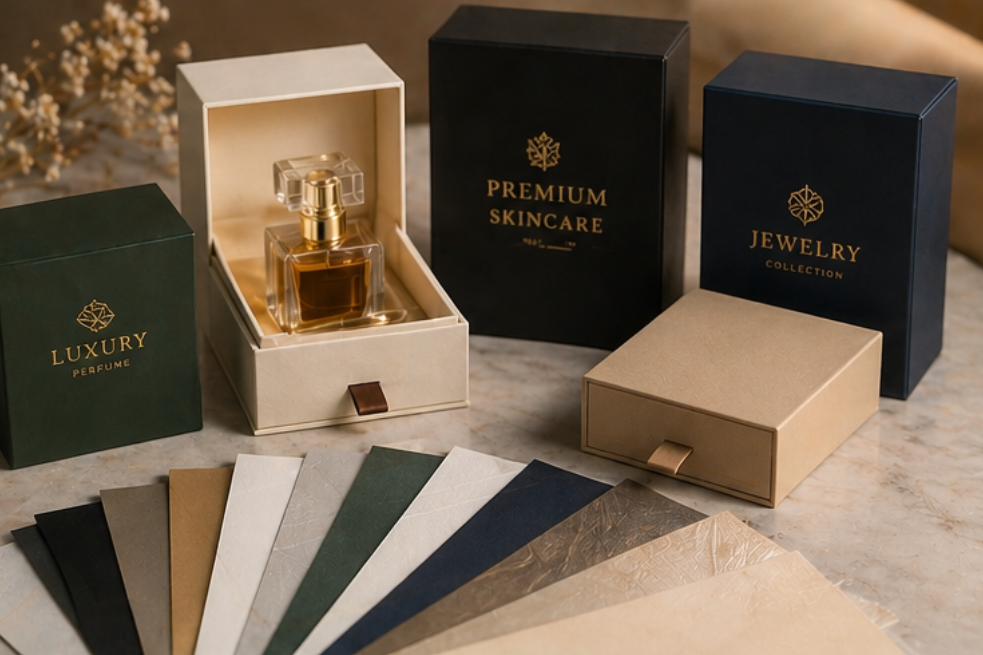
Why Material Selection Matters In Luxury Packaging
Luxury packaging is not only about appearance. The material determines box strength, touch feeling, color performance, printing effect, durability and overall brand impression. A high-end perfume box, cosmetic gift box or jewelry box should feel stable, refined and consistent with the product value.
Before placing an order, buyers should confirm the box structure, product weight, target market, finishing method and sustainability requirements. The right material can improve protection, reduce damage risk and make the product look more premium in retail, gifting and online sales channels.
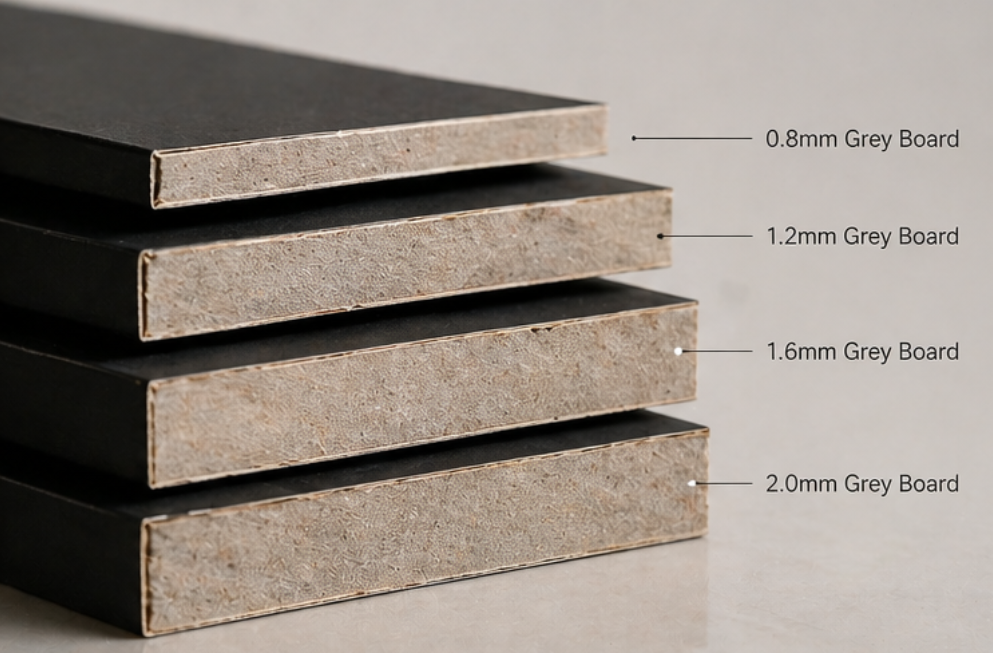
1. Choose The Right Grey Board For Box Strength
Grey board is the core material of most rigid luxury packaging boxes. It affects the box shape, hardness and compression resistance. For perfume, cosmetics, jewelry and gift packaging, thicker grey board is often used to create a strong and premium structure.
Buyers should choose grey board thickness according to product size and weight. A small cosmetic box may use a lighter board, while a heavy perfume bottle or wine gift box may need stronger board support. If the board is too thin, the box may deform during transport or feel cheap in the customer’s hand.
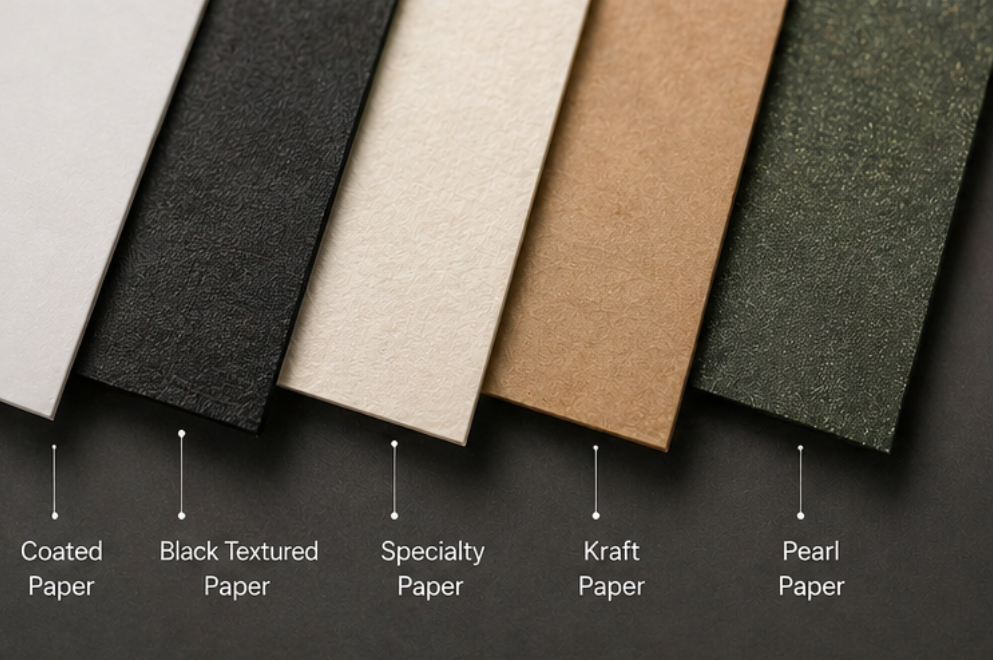
2. Select Surface Paper According To Brand Style
Surface paper is the outer layer that customers see and touch. Common options include coated paper, art paper, specialty paper, textured paper, kraft paper and metallic paper. Each material creates a different visual impression.
Coated paper is suitable for sharp printing and rich color. Textured paper is often used for elegant luxury packaging. Kraft paper works well for natural, eco-friendly or handmade-style brands. Specialty paper can create a unique touch and help the product stand out.
| Material | Best For | Main Advantage |
|---|---|---|
| Coated Paper | Cosmetics, perfume, retail packaging | Good printing effect and color performance |
| Textured Paper | Luxury perfume, jewelry, gift boxes | Premium touch and elegant appearance |
| Kraft Paper | Eco-friendly brands and natural products | Natural look and recyclable image |
| Specialty Paper | High-end brand packaging | Unique texture and strong brand differentiation |
3. Match Material With Printing And Finishing
Not every material is suitable for every finishing method. If your packaging needs gold foil stamping, embossing, debossing, spot UV or soft-touch coating, the material must support stable processing. Some textured papers may look elegant but may not show fine printed details as clearly as coated paper.
Buyers should confirm the finishing effect during sampling. For luxury packaging, common combinations include black textured paper with gold foil, white coated paper with matte lamination, kraft paper with simple one-color printing, and specialty paper with embossing or debossing.
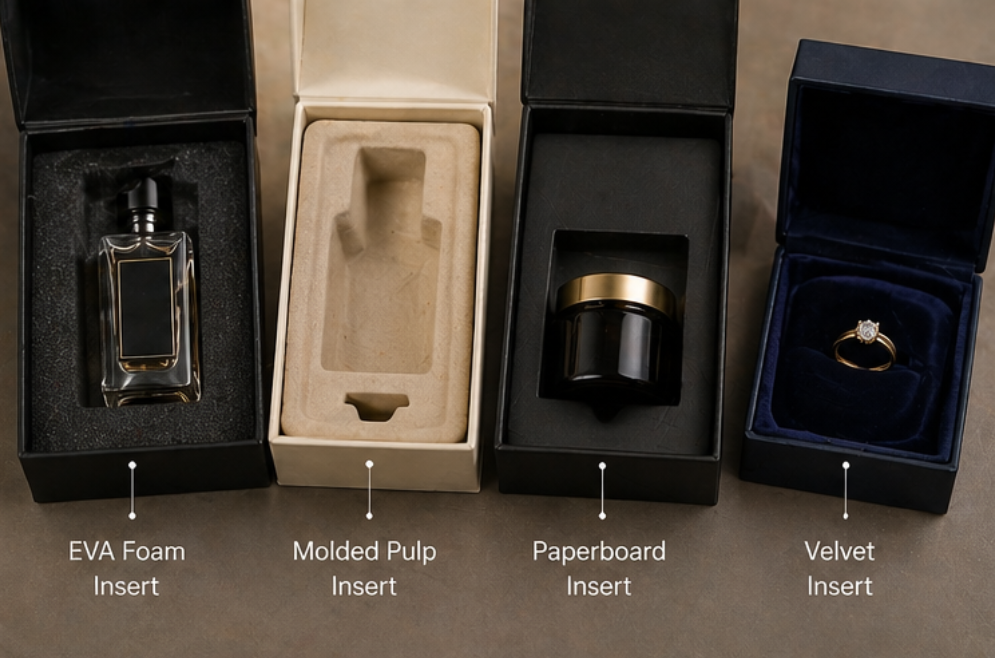
4. Choose Insert Materials For Product Protection
Insert material is especially important for perfume bottles, cosmetics jars, jewelry, electronics and gift sets. The insert keeps the product stable and improves the unboxing experience. Common insert materials include EVA foam, paperboard insert, molded pulp, sponge, velvet-covered insert and cardboard tray.
For luxury packaging, the insert should match both protection needs and brand style. EVA foam provides strong support, molded pulp is more eco-friendly, and velvet-covered inserts create a high-end display effect.
5. Consider Eco-Friendly And Sustainable Materials
More international brands now prefer sustainable packaging materials. Buyers can consider recyclable paperboard, FSC paper, molded pulp inserts, soy-based ink and plastic-free packaging structures. These choices help improve brand image and meet the expectations of eco-conscious consumers.
However, sustainable packaging should still meet strength, printing and protection requirements. Before mass production, buyers should test whether the eco-friendly material can support the required structure and finishing effect.
Buyer Checklist Before Confirming Materials
Confirm product size, weight and protection needs.
Choose grey board thickness according to box structure.
Select surface paper based on brand positioning.
Check whether the material supports required printing and finishing.
Confirm insert material for product stability.
Ask for physical material samples before mass production.
Compare standard materials and eco-friendly options.
Approve a complete sample with material, printing and finishing together.
Conclusion
Choosing materials for luxury packaging boxes requires a balance between appearance, strength, touch feeling, cost and sustainability. Grey board determines structure, surface paper determines visual style, finishing creates premium details, and insert materials protect the product inside.
The best material choice should match your product value, brand image, sales channel and shipping requirements. For custom luxury packaging projects, physical samples are essential before mass production.
Need Help Choosing Luxury Packaging Materials?
Contact us to compare grey board, specialty paper, inserts, finishing options and sustainable materials for your custom packaging boxes.
Get Quote Contact UsRelated product and article resources
For procurement comparison and technical evaluation, readers can continue with these related product pages and supporting articles.
