

Rigid Box vs Folding Carton: Which Packaging Is Better?
A practical guide for brand owners and packaging buyers comparing rigid boxes and folding cartons for custom product packaging.
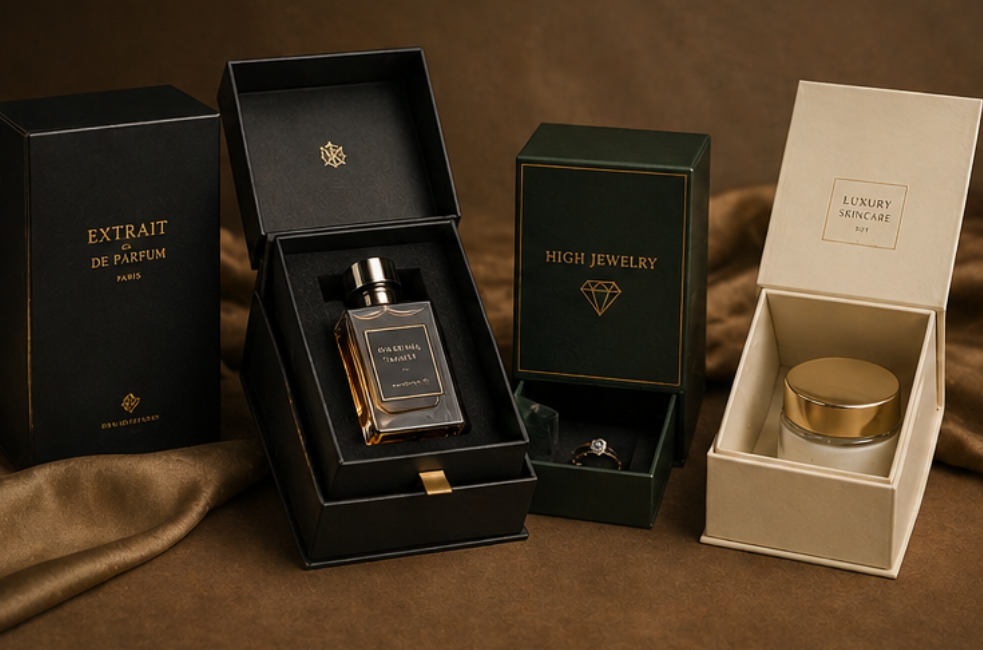
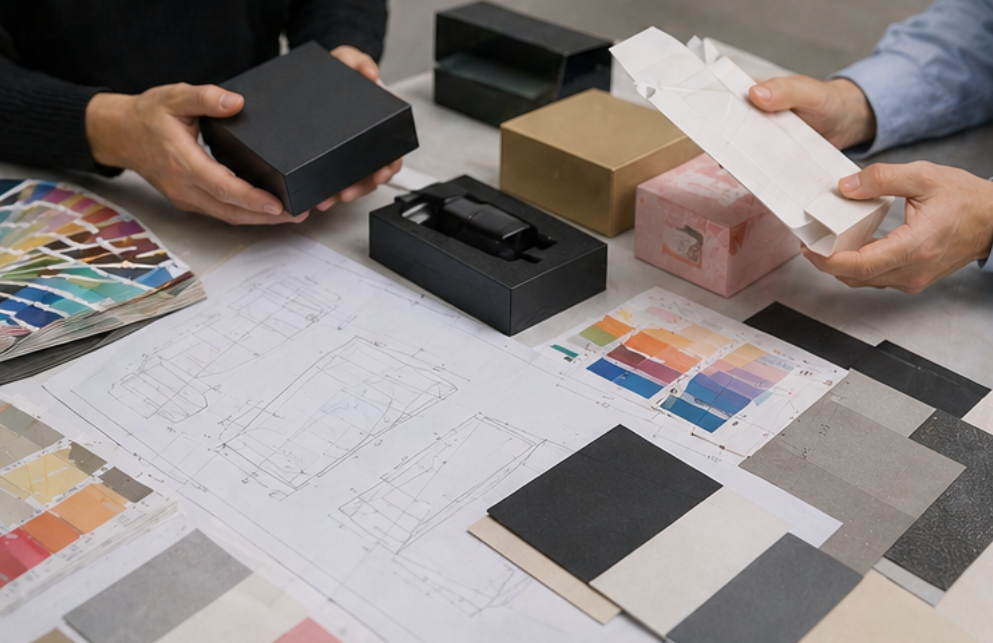
A rigid box is a premium packaging box made from thick grey board wrapped with printed paper, specialty paper or textured paper. It is commonly used for luxury perfume, cosmetics, jewelry, wine, electronics and gift packaging. Compared with ordinary paper boxes, rigid boxes have stronger structure, better protection and a higher-end visual impression. Rigid boxes are often chosen when the product needs to look premium, feel solid in the hand and create a better unboxing experience. Common rigid box structures include lid and base boxes, magnetic closure boxes, drawer boxes and book-style boxes. A folding carton is usually made from paperboard or coated paperboard. It is printed, die-cut, folded and glued into shape. Folding cartons are lightweight, cost-effective and suitable for large-volume retail packaging. They are widely used for cosmetics, skincare products, food, small electronics, medicine boxes and daily consumer goods. Folding cartons are easier to store and ship because they can often be delivered flat before assembly. For buyers who need lower unit cost and efficient production, folding cartons are often a practical choice. Choose a rigid box when your product needs a premium image, stronger protection or a high-end gift presentation. Rigid boxes are especially suitable for products with higher selling prices, fragile bottles or strong brand identity requirements. For example, perfume packaging, luxury skincare gift sets, jewelry packaging and premium electronics often use rigid boxes because buyers expect a more refined unboxing experience. A rigid box can make the product feel more valuable and help the brand stand out in competitive retail channels. Choose a folding carton when you need lower cost, faster production and efficient storage. Folding cartons are suitable for large-volume orders and products that do not require a heavy luxury box structure. If your product is sold through supermarkets, pharmacies, online stores or standard retail channels, folding cartons can provide enough printing area, brand display and basic protection while keeping the packaging cost under control. Is the product positioned as luxury, premium or mass-market? Does the product need strong protection during shipping? Is the packaging mainly for retail display or gift presentation? What is the target unit packaging cost? Do you need special finishes such as foil stamping or embossing? Will the packaging be shipped assembled or flat? What is the order quantity and delivery schedule? Do you need an inner insert to hold the product securely? There is no single answer. Rigid boxes are better for premium image, product protection and gift experience. Folding cartons are better for cost control, large-volume retail packaging and efficient logistics. The right choice depends on your product value, brand positioning, sales channel, order quantity and budget. For high-end perfume, cosmetics, jewelry and gift packaging, rigid boxes are usually the better choice. For skincare products, food packaging, medicine boxes and daily retail products, folding cartons may be more practical and economical. Contact us to compare rigid boxes, folding cartons, materials, inserts and finishing options for your custom packaging project.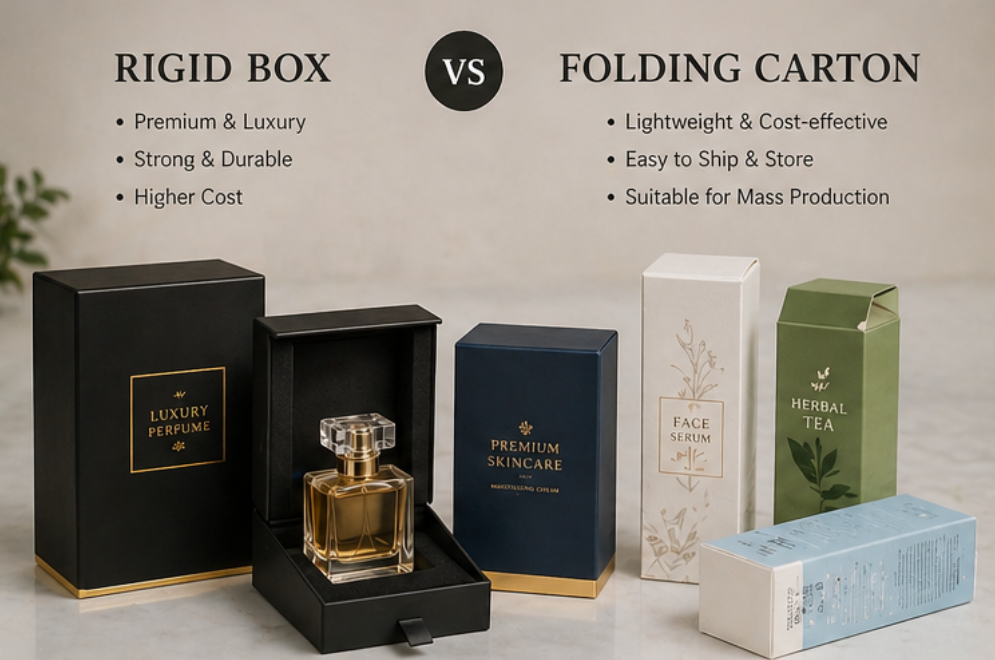
What Is A Rigid Box?
What Is A Folding Carton?
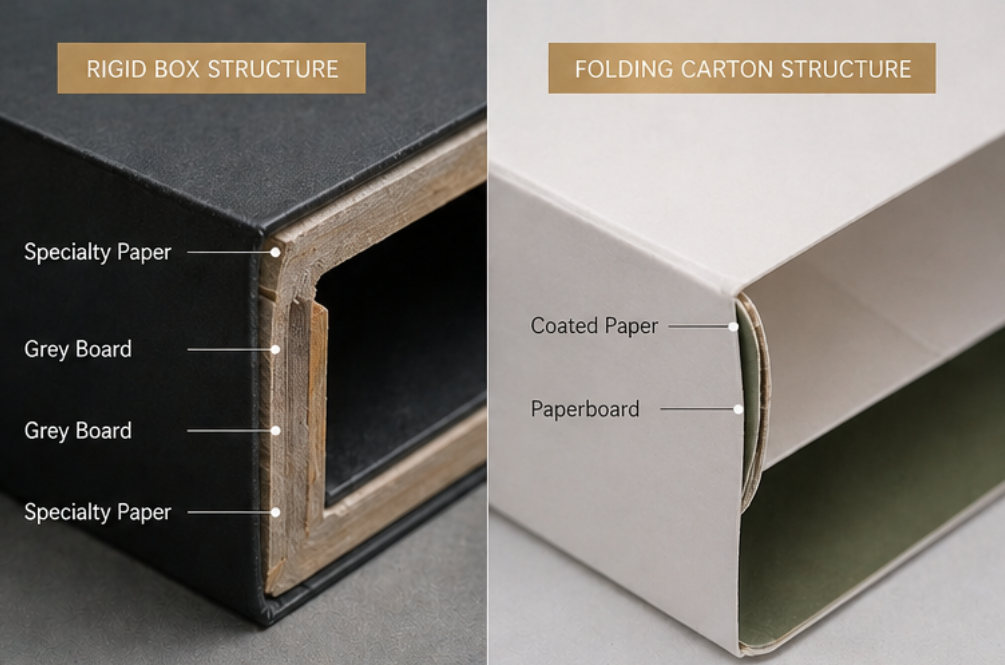
Rigid Box vs Folding Carton: Key Differences
Comparison Item Rigid Box Folding Carton Positioning Premium and luxury packaging Retail and mass-market packaging Material Thick grey board with wrapped paper Paperboard or coated paperboard Strength Stronger and more durable Lighter and less rigid Cost Higher unit cost More cost-effective Storage Takes more space Can be shipped flat in many cases Best For Perfume, jewelry, gift sets, luxury cosmetics Skincare, food, medicine, daily retail products When Should You Choose A Rigid Box?
When Should You Choose A Folding Carton?
Buyer Checklist Before Choosing
Which Packaging Is Better?
Need Help Choosing The Right Packaging Box?
